Showing posts with label kurdish. Show all posts

Saturday, January 17, 2015

Kurdish freedom fighters, Kurdish terrorists

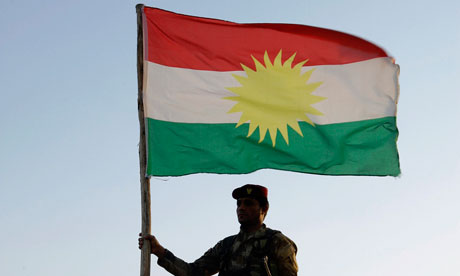
Kurdistan Flag flying high in Kurdish KurdistanIn the view of the United States State Department some armed Kurdish groups simply constitute paramilitary forces (consider the Iraqi Peshmerga) and others terrorist groups, the most salient example being of course the Kurdistan Workers Party (the PKK) which has been on the U.S. list of designated terrorist entities since 1997.


Indeed the two primary political parties in Iraqi Kurdistan, the Patriotic Union of Kurdistan (PUK) and the Kurdistan Democratic Party (KDP), were, remarkably, designated as Tier-3 terrorist groups. And even though the U.S. has worked with them throughout the years that classification was only revoked late last year!


This scribbler has wondered that given the fact the primary Kurdish political party in Syria Kurdistan, the Democratic Union Party (PYD) who make up the backbone of the Syrian Kurdish regions fighting force, the YPG, who have been fighting Islamic State tooth-and-nail in defense of Kobani and also happens to be a close PKK affiliate, whether or not that in turn means that any westerner fighting in their ranks is technically a “terrorist”, or is, in a legal sense, aiding and abetting what amounts to a close affiliate of a United States, and European Union among others, designated terrorist group by fighting with them? Even if just for the ad-hoc purpose of confronting Islamic State terrorists?


Photo from Kobani, YPJ female fighter with YPG flag in Kurdish Syria

Photo from Kobani, YPJ female fighter with YPG flag


The U.S. has dropped some small arms to the Kurdish YPG defenders in Kobani and bombed the Islamic State forces who have tried to overrun their positions there. But nothing overly substantial as the U.S. still seems highly reluctant about revising or reevaluating its designating of the PKK as a terrorist group. Nevertheless, in the fight against the Islamic State the PKK is showing itself as quite a formidable militia.


That group has been using Northern Iraq as a safe haven of sorts for years now as part of its campaign against the Turkish state. A campaign which spanned from 1984 until peace talks between the PKK and the Turkish government were initiated in 2013. Turkish Air Force F-16 jets have frequently launched air strikes into Iraqi Kurdistan to bomb PKK positions in the mountains there.


Now the PKK are coming out and onto the front-line in the fight against Islamic State in that region where they essentially have a de-facto military alliance with the Peshmerga. And, as I said, their Kurdish affiliates in Syria are the ones holding the line there against Islamic State. Not only are the Peshmerga fighting alongside the PKK to retake Iraqi Kurdish territory Islamic State seized but they have also sent some fighters into Syria to help bolster the YPG’s defense of Syrian Kurdish territory. It’s also no secret that the Syrian Kurds have crossed into Iraq to help their Iraqi Kurdish brethren liberate places like Sinjar from Islamic State.


So we have reality on the ground whereby a de-facto alliance between these two armed entities is concerned. The Kurdistan Communities Union (the KCK) is an umbrella group which consists of the PKK and affiliates such as the aforementioned PYD. It issued a statement recently insisting that the circumstances dictate that the necessity of a joint Peshmerga-PKK fighting force is now “a must”.


This is interesting. While it doesn’t at all mean that such an intertwining of fighting forces will transpire these statements do come as we see more and more cross-border Kurdish solidarity. BBC News encapsulated this feeling in a recent report about the funeral of a Turkish Kurdish (many Kurdish nationalists find labels like ‘Iraqi Kurd’ or ‘Syrian Kurd’ insulting, they see themselves as ‘Kurdish Kurds’ if anything, who knows perhaps they will all be referred to as Kurdistani’s if they do get their own independent nation state in the future) girl named Gulsum. She had joined the PKK and was killed fending off Islamic State attacks on Kobani. Her father was quoted proclaiming at her funeral that, “Kurdish fighters from all parts of Kurdistan went to Kobani. This means that the Kurds are coming together.”


Indeed Islamic State’s vicious assault on their communities in both Iraq and Syria have brought these Kurdish groups together. Regardless of whether it was a result of battlefield expediency or a feeling of fraternal unity in the face of a common enemy this is indeed the case.


What will all this mean for the PKK in the long run? Will political expediency and the fact it has proved effective in the fight against the Islamic State group (which, even if you do consider the PKK to be a terrorist group, is certainly the “greater evil” in this fight) lead to the United States to reconsider its branding of the PKK as a terrorist organization?


It certainly wouldn’t be unprecedented when you recall that the exiled Iranian group the People’s Mujahedeen of Iran (MEK) was on that very same U.S. terror list for quite some time but was removed in 2012 under the pretext that the group had cooperated with the U.S. substantially and had been disarmed. Perhaps if they broker a successful comprehensive peace agreement with Turkey coupled with continued advances on the battlefield against Islamic State will see to the PKK go down a not too dissimilar path.


Iraq Newsletter


Want to read more articles like this?


* We will send you an email as soon as we publish the next article!


The post Kurdish freedom fighters, Kurdish terrorists appeared first on Baghdad Invest.


Thursday, January 8, 2015

From Sinjar to Kobani

The Iraqi Kurds are on the front-line in the fight against the Islamic State (Daesh) Islamist group presently operating in both Iraq and Syria. From Sinjar in Northern Iraq to Kobani in neighbouring Syria the Kurds are bravely taking the fight to the enemy, protecting their brethren and liberating other minority groups which Daesh have been terrorizing and murdering.


Kurds helping those in need up on Mount SinjarIn both Sinjar and Kobani we see that the Kurds are fighting quite literally “street-by-street, house-by-house” against these violent and ruthless jihadi forces. They are the ones who have been undermining Daesh’s expansion since its rapid territorial gains in Nineveh last June, like a real thorn in their side, when the Iraqi Army was disorganized and rendered essentially powerless to do anything substantial. Also given where their homeland is situated the eight million or so Kurds in Northern Iraq stand in the way of any further gains on Daesh’s part eastward, a demographical and geographical bulwark not wholly unlike the Shia one in Iraq’s south where throngs of devout Shia Muslims recently turned out to mark the Arbaeen commemoration in clear defiance of Daesh, who detest Shia Muslims like they do other groups they deem to be heretical, showing they are standing firm and are not cowering in fear.


In addition to all this the, young and old alike, brave fighters of the Peshmerga are working and fighting hard to reverse the ground which Daesh gained when Mosul fell to them last June. We saw how minorities in Northern Iraq were displaced and massacred by their vicious onslaughts, like those Yazidi’s who fled in terror onto Mount Sinjar, where they risked becoming trapped and perishing or alternatively being enslaved, tortured or massacred by Daesh if they tried to return to, or remained in, their homes.


The Kurds are earnestly fighting to undo this untenable state-of-affairs and rescue the remainder of those trapped and threatened Yazidi’s and take the fight right back to their occupied homes in Sinjar itself. One female Kurdish fighter fighting on behalf of the Yazidi’s to retake their Sinjar community said of those Daesh fighters that, “They don’t respect women’s rights, they have captured and killed many Yazidi women,” before going on to declare, “I’m here to kick them out and liberate my Yazidi sisters.”


Peshmerga fighters are also taking the fight to Daesh in Syria where that Islamist group has been sending a lot of its fighters to try and defeat armed Syrian Kurds who are defending the Syrian Kurdish town of Kobani. A town that has become a symbol of defiance, not to mention of stoic courage and determination, in the Syrian theater of the war against Daesh who have been earnestly trying to crush it for months, so it doesn’t remain standing as an emulative example to other Kurds and minorities who try to resist and repel their sectarian conquests, and have to date failed in their endeavour. In the face of Kurdish Peshmerga fighters fighting alongside the Syrian Kurdish YPG militia (whose defense of that town is being supported by U.S. air strikes aimed at the attackers) Daesh are being driven out of that urban center as they are from various parts of Northern Iraq.


Kurdish YPG fighters in Kobani


In Iraq Kurds are risking their lives to push back Daesh who still retain hold over the entire metropolis of Mosul. Ahead of a planned Iraqi Army offensive – the army doubtlessly has a lot of making up to do after their embarrassing performance last summer – to retake that city the Kurds liberation of territory in areas east of Mosul is undoubtedly helping to pave the way for a more thorough counteroffensive to rid all of Northern Iraq of these Islamists. Late in 2014 the Iraqi Kurds reportedly liberated 2,500 square kilometers and appear to be fighting in order to link-up their front-lines exponentially with each decisive victory on the battlefield building up what is gradually becoming an ever more powerful juggernaut against Daesh.


Standing on a hilltop his forces had recently retaken from Daesh a Peshmerga commander recently declared that, “This area is multicultural and we as Peshmerga are ready to sacrifice with our lives to protect every inch of this land.”


Kurdish fighters fighting Daesh


This underscores a very important point that need not be forgotten any time soon. For the minority communities of Northern Iraq this fight amounts to an existential one as well as a secular one which should be trumpeted by any proponent of civil and human rights of minority groups all across the planet. Iraqi Kurds fighting today are not only securing their homeland for their brethren. It is clear that the actions they are taking is seeing to it that historic communities in Northern Iraq like the Assyrians, and of course the aforementioned Yazidi’s, are protected and are not “cleansed” from their historic homelands by such horrid and tyrannical reactionaries.


Iraq Newsletter


Want to read more articles like this?


* We will send you an email as soon as we publish the next article!


The post From Sinjar to Kobani appeared first on Baghdad Invest.


Monday, March 11, 2013

Kurdish view of the Iraq war

Iraq Kurdistan independence

The fall of Saddam Hussein and the end of UN sanctions against Iraq have benefited Iraqi Kurdish communities since 2003. Photograph: Azad Lashkari/Reuters
"Did it happen?" I asked my father instantly after I woke up on the morning of 20 March 2003, to which my father replied with a smile, "Yes". Yes, the United States of America and its allies began their attacks on Iraq. Yes, my life was going to change. And it did. Since that rainy day I spent in the countryside because we were scared Saddam Hussein was going to use weapons of mass destruction against Kurdish cities, my life has never been the same.
Growing up in the 1990s in northern Iraq, where the international committee had imposed a "no-fly zone" sanction to prevent the Iraqi army from aerially attacking us, I lived a childhood isolated from the rest of the world. The sanctions aimed at the Iraqi government did more harm to the people than to the government; it resulted in the death of over 500,000 Iraqi children. My only window into the outer world was a satellite dish that helped my dream grow about how I'd one day see that outer world. It seemed like an unreachable dream up until the US announced war on Iraq. I saw hope for the first time, and my hope represented the hope of one whole nation.
There are many disparities between the views on the war. I understand the American point of view. Millions of Americans opposed the war, believing that their sons and daughters did not need to sacrifice their lives for a country thousands of miles away, nor did they need to spend billions of dollars on a war they deemed unnecessary.
Their concerns are now justified, given the damages that war spending hurt the US economy severely. Moreover, millions feared the bloodshed the war would cause. And it did; thousands of Iraqis and coalition soldiers have lost their lives since 2003.
The views on the war within Iraq at first were largely positive. Shia Iraqis in southern Iraq, subject to continuous persecution from Saddam Hussein, were pro-war. Sunni Iraqis, even though treated better than the rest of Iraqis, were split between those who supported Saddam and those who backed the war. Saddam had dragged Iraqis into two wars: a bloody and lengthy war against Iran and a short war with everlasting effects against Kuwait. The citizens, rather than the government, were paying for both.
Tired of Saddam, the 2003 war seemed like a lifeline for most Iraqis. However, ten years after the war, Iraqis in mid- and southern Iraq haven't gotten much in return. They have exchanged a dictator for insecurity, sectarian conflicts, chaos and corruption.
Kurds – that forgotten nation before the war– have definitely benefitted the most from this war so far. Throughout his reign, Saddam constantly tried to obliterate Kurds. Having lost two uncles throughout the Kurdish struggle against Saddam, I knew what removing a dictator such as Saddam meant. It would cause bloodshed, yes, but I was sure Iraqis – and especially Kurds – would be better off without him.
From 1991 up until 2003, Saddam cut off any financial support for Kurds and we had to live on donations from international organizations, a few low-budget job contracts and the smuggling of goods mostly from Iran and, to a lesser extent, Turkey. Starvation was rampant; ordinary citizens suffered from the UN trade embargoes. Many people had to sell items within their homes in exchange for food.
Ever since 2003, doors have opened for us from every direction. Kurdistan of Iraq, also known as the "other Iraq", is now a safe haven where thousands of Iraqis – including Christians – have sought shelter. Economically, we've started having a boom and the economy is on a continuous rise. Living standards of the majority of Kurds have improved. Salaries have increased exponentially. Numerous job opportunities are opening up. International companies and organizations are constantly flowing into Kurdistan. Kurds now receive 17% of Iraq's annual budget. Besides that, Kurds currently sign oil contracts with many international oil companies independently from Baghdad.
Therefore, while most people agree that the US invasion of Iraq has not been justified by the chaos and insecurity it left Iraq in, the US gave Kurds the self-rule we were promised by the Treaty of Sèvres almost a century ago, but which was later robbed from by that of Lausanne. Kurdistan of Iraq is now a hub that attracts millions of investors from around the globe. While Americans and Iraqi Arabs criticize the US for the war, Kurds are grateful and are holding on to and building up on the lifeline provided them.

Kurds eager to end dependence on Iraq

A Kurdish flag flies at the Citadel fortress in the old center of Irbil, the capital of Iraq's autonomous Kurdish region.
 
IRBIL, IRAQ — At an elite private school in Iraq’s autonomous Kurdish region, children learn Turkish and English before Arabic. Kurdish university students dream of landing jobs in Europe, not Baghdad. And a local entrepreneur says he doesn’t like doing business beyond the self-rule zone because the area outside Kurdish control is still too unstable.

In the decade since U.S.-led forces toppled Iraqi dictator Saddam Hussein, Kurds have trained their sights toward Turkey and the West, at the expense of ties with the still largely dysfunctional rest of the country.

Aided by an oil-fueled economic boom, Kurds have consolidated their autonomy, increased their leverage against the central government in Baghdad, and are pursuing an independent foreign policy often at odds with that of Iraq.

Kurdish leaders say they want to remain part of Iraq for now, but that increasingly acrimonious disputes with Baghdad over oil and territory might just push them toward separation.

“This is not a holy marriage that has to remain together,” Falah Bakir, the top foreign policy official in the Kurdistan Regional Government, said of the Kurdish region’s link to Iraq.

A direct oil export pipeline to Turkey, which officials here say could be built by next year, would lay the economic base for independence. For now, the Kurds still can’t survive without Baghdad.

Their region is eligible for 17 percent of the national budget of more than $100 billion, overwhelmingly funded by oil exports controlled by the central government.

Since the war, the Kurds have mostly benefited from being part of Iraq.

At U.S. prodding, majority Shiites made major concessions in the 2005 constitution, recognizing Kurdish autonomy and allowing the Kurds to keep their own security force when other militias were dismantled.

Shiites also accepted a Kurd as president of predominantly Arab Iraq.

Iraq’s central government strongly opposes the Kurds’ quest for full-blown independence.

Iraqi leaders bristle at Kurdish efforts to forge an independent foreign policy, and the two sides disagree over control of disputed areas along their shared internal border.

Friday, January 11, 2013

Iraq Threatens to Seize Kurdish Oil

Iraq threatens to seize oil shipped without its consent, sue dealers after Kurds begin exports


Baghdad Invest - 11/01/2013 Baghdad.

Iraq has threatened to seize oil exports made without its consent and sue companies dealing in what it sees as contraband crude just days after the country's self-rule Kurdish region began unilaterally exporting oil.
The spokesman for Iraq's Kurdish regional government, Safeen Dizayee, confirmed Friday that the largely autonomous territory began shipping oil unilaterally to Turkey in the past few days. He declined to say how much was being shipped abroad.

The move appears to have triggered Baghdad's threat. A statement quietly posted a day earlier on the website of the State Oil Marketing Organization warned that Iraq may confiscate what it sees as oil cargoes "smuggled across borders," and sue sellers, buyers and companies that transport the crude.

The statement said SOMO "is the sole legally authorized entity that has the exclusive right to export and import crude oil, gas and oil products" in Iraq.

A hard line from Baghdad over the shipments could exacerbate simmering tensions between Iraq's central government and the Kurds. The two sides appeared on the brink of war just two months ago after an exchange of fire prompted them to deploy troops and heavy weapons along their disputed internal border.

Iraq's central government and the Kurds have been at loggerheads for years about how to manage Iraq's vast oil wealth.
Since the 2003 U.S.-led invasion, the Kurds have struck more than 50 deals with foreign oil companies, including Exxon Mobil Corp., Chevron Corp. and France's Total S.A. Baghdad considers the deals illegal. It believes the central government should manage the country's oil policy and wants all exports to travel through state-run pipelines.

Dizayee said the Kurds are shipping the oil into Turkey by tanker truck. Much of the exported crude will be refined and then shipped back to the Kurdish region, which has a pressing need for fuel during the cold winter months, he said.
He insisted that the Kurds remain open to talking with Baghdad about the new exports within the framework of a comprehensive negotiation.
"If we need to address this issue, we need to address it as a complete package," he said.
The Kurds last month suspended oil exports through a pipeline managed by Baghdad over a payment dispute with the central government. Those exports fall under a tentative 2011 deal which calls on the Kurds to send the oil to Baghdad, which sells it, and pays 50 percent of the revenues to oil companies to reimburse their development costs.
Iraq sits atop the world's fourth largest proven reserves of conventional crude, with about 143.1 Billionn barrels.

Oil revenues make up 95 percent of the country's budget — a portion of which is earmarked for the Kurdish region.

Latest Iraqi related news from:
www.baghdadinvest.com